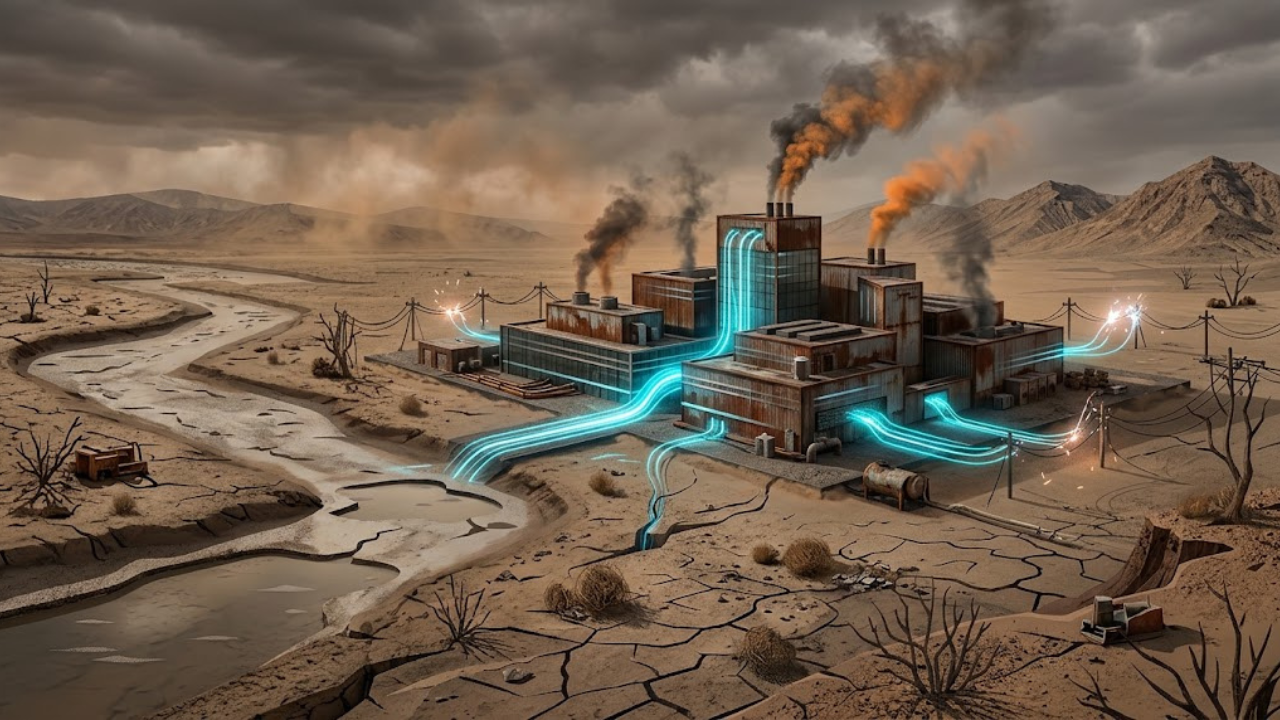
The Hidden Environmental Cost of AI: What Data Centers Aren’t Telling You
When you ask an AI chatbot to generate a recipe, write code, or create a image, it feels effortless. A few seconds pass, and magic appears on your screen. But behind that instant response lies a massive physical footprint.
Artificial intelligence isn’t floating in a cloud—it lives on ground level in massive, power-hungry facilities known as AI data centers. As the tech industry races to build bigger and smarter AI models, these computing giants are quietly placing an unprecedented strain on our planet’s energy grids, water supplies, and ecosystems.
The Power Surge: Energy Grids Under Siege
Traditional data centers already consume significant electricity, but AI data centers are an entirely different beast. Training a single massive AI model can consume as much electricity as hundreds of American homes use in a full year. Running those models for millions of daily users requires a continuous, non-stop flow of power.
To meet this surging demand, tech companies are pushing energy grids to their limits:
- Delaying Clean Energy Transitions: In several regions, power utilities are delaying the retirement of coal-fired and natural gas power plants just to keep up with the electricity demands of new data center corridors.
- Overburdened Grids: Local utility grids face increased risks of blackouts and brownouts as industrial-scale power demands outpace renewable energy installations.
- Skyrocketing Carbon Footprints: Despite corporate promises of “net-zero” operations, total emissions from major tech corporations have surged in recent years, largely driven by expanded AI infrastructure.
Millions of Gallons: The Hidden Water Drain
Computers generate intense heat, and high-performance AI chips generate even more. To prevent millions of processors from overheating, data centers rely heavily on cooling systems—many of which consume vast amounts of fresh water.
- Evaporative Cooling: Many facilities pump millions of gallons of potable water daily through evaporative cooling towers. Much of this water evaporates directly into the atmosphere, removing it from local watersheds.
- Drought-Prone Stress: Tech companies frequently construct these massive facilities in areas with cheap land and tax incentives—regions that often overlap with severe, ongoing drought conditions.
- Impact on Local Communities: When data centers draw down local aquifers, nearby towns and agricultural areas face water restrictions and higher utility bills.
E-Waste and Hardware Turnover
Unlike standard web servers that last for many years, the fast-paced AI arms race accelerates hardware obsolescence. Tech giants constantly swap out older processing units for the newest, fastest chips to maintain a competitive edge.
This rapid turnover creates two major problems:
- Resource Extraction: Producing high-end AI chips requires intense mining for rare earth elements, lithium, copper, and cobalt, causing widespread habitat destruction and toxic runoff.
- Electronic Waste: Discarded servers and cooling components contribute to the growing global e-waste crisis, often leaking hazardous materials like lead and mercury into landfills if improperly recycled.
Building a Sustainable Path Forward
Highlighting these dangers doesn’t mean we must abandon AI technology altogether. Instead, it demands accountability and smarter engineering. To protect the environment, the tech industry and lawmakers must prioritize:
- Location Awareness: Restricting data center construction in water-stressed regions and prioritizing areas with abundant renewable energy.
- Better Cooling Tech: Investing in closed-loop liquid cooling systems that recycle water instead of evaporating it into the air.
- Energy Transparency: Standardizing reporting on energy and water consumption for individual AI queries and model training sessions.
- Model Efficiency: Developing smaller, more efficient AI models that deliver powerful results with a fraction of the computational load.
The Bottom Line
I’m not anti-AI, as it has the potential to help solve complex problems, from climate modeling to medical breakthroughs, but I want a very strict government regulation for it to protect both the environment and people. If we ignore the environmental cost of the infrastructure powering it, the solutions might come at too high a price. The next time you type a prompt into an AI tool, remember: every query leaves a footprint on the physical world.