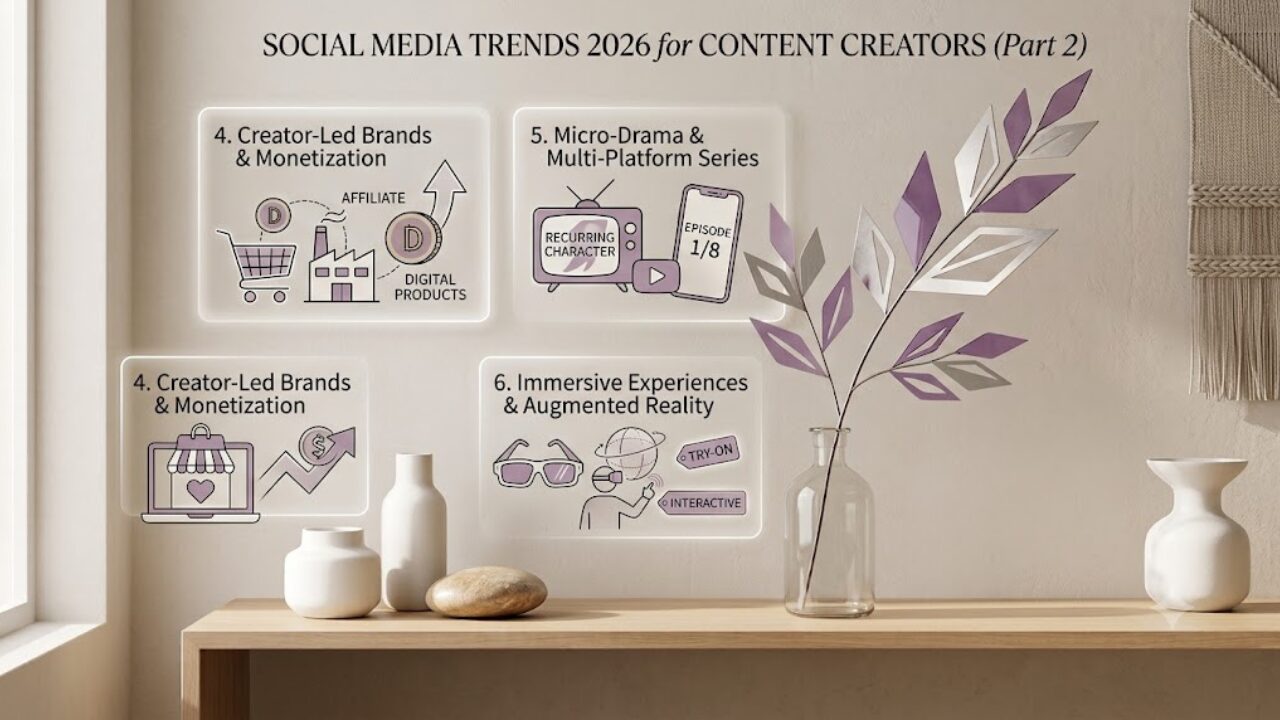
Social Media Trends 2026 for Content Creators (Part 2)
I published part 1 of the 2026 social media trends for content creators earlier this week. If you missed it, click here to read it. Today I’ll pick up where I left off and talk about what’s currently working for creators on the three other major social media platforms out there: Pinterest, LinkedIn, and X (Twitter).
Pinterest has fully embraced its identity as a visual search engine and shopping hub, not just a mood-board app. People searching “kitchen makeover ideas” or “capsule wardrobe” aren’t just browsing; they’re often close to buying, which makes Pinterest one of the highest-intent platforms out there for creators in lifestyle, home, fashion, and food niches.
The platform’s annual Pinterest Predicts report has become a genuine planning tool, with a strong track record for calling upcoming aesthetic and cultural shifts. Creators who build content around these predicted trends months in advance, rather than reacting after they’ve peaked, tend to capture the most traffic.
Hyper-specific, niche content is winning over broad topics. Instead of “travel tips,” think “quiet European destinations for introverts.” Video pins are accelerating, AI-assisted visuals are becoming normal, and SEO-style keyword optimization in your pin titles and descriptions is no longer optional if you want to show up in search.
The takeaway: Treat Pinterest like Google, not Instagram. Plan seasonally, get specific with your niche, and optimize every pin for search.
LinkedIn in 2026 wants less polish and more personality. Audiences are tired of overly corporate messaging, and they’re rewarding leaders and employees who talk openly about real decisions, mistakes, and lessons learned instead of posting humble-brag announcements.
That shift is showing up in the data. Carousels and multi-image posts are quietly out-performing single images and standard video, even though video and images still make up most of what gets posted. One thoughtful comment on your post can boost your chances of being shown that same commenter’s future content by a wide margin, which means sparking real discussion matters more than racking up passive reactions.
Companies have also caught on to something important: audiences trust employees more than they trust brand accounts or even CEOs. That’s fueling a wave of “employee creators,” where everyday team members are trained and encouraged to post like individual creators rather than corporate mouthpieces.
The takeaway: Post less often, but say something real. A post that sparks a genuine conversation will outperform ten generic ones.
X (Twitter)
X remains the platform where trends move the fastest and where showing up consistently pays off the most. The algorithm now favors verified accounts, video content, and genuine engagement over the more mechanical follower-count games of years past.
The creator economy on X has matured, too, with more people turning their following into real income through subscriptions, sponsorships, and exclusive content. But the underlying strategy hasn’t changed much: reply strategically, post multiple times a day if you can keep quality up, and don’t panic over any single post’s performance. Growth on X tends to come in bursts rather than a steady climb, so creators who treat it as a long game—posting 3 to 5 times daily and diversifying their formats—are the ones who build lasting audiences.
The takeaway: Consistency and quick, thoughtful engagement beat any single “viral” attempt.
The Bigger Picture
Look across all three platforms and the three others I discussed before and you’ll notice one theme keeps showing up: audiences can tell when something feels manufactured, and they’re rewarding creators who feel human. AI is helping people edit faster, dub videos into new languages, and plan smarter, but it’s not replacing the raw, personal moments that actually make people hit follow, send, or comment.
If you take one thing from all of this, let it be this: pick the platforms where your audience already lives, show up like an actual person, and build something people want to be part of—not just something they scroll past.


I kid you not, I just left Pinterest about five minutes ago. I was adding pins and also looking at other pins on the same topic. And I don’t go there very often. I appreciate what you’re saying, though, about how to make use of it.
Thanks for the overview, Danwil. I try to spend less time on social media. Pinterest – even though I do like all the cake recipes – is such a time thief 😉 And LinkedIn got very spammy and full of AI content.
I’ve read both parts and this is very helpful. I’ve bookmarked it.
Interesting read. Thanks for sharing.
“Treat Pinterest like Google, not Instagram” may be the clearest explanation of Pinterest I’ve ever read! I also loved your example of replacing a broad topic with something as specific as “quiet European destinations for introverts.” As an author and storyteller, I’m wondering whether I’ve been overlooking Pinterest. I’m thinking of creating a whole board of Loveandpizza.it! 😀
Wow! You have some great suggestions and examples. Thanks so much!